
Yasuyuki KAWANISHI + ICHIBANSEN / nextstations
川西 康之 + 株式会社イチバンセン 一級建築士事務所 / ネクストステーションズ
Sangane House
Kota town,Aichi Pref, Japan
 Sangane House さんがね家さんphoto by Ryosuke SATO + ICHIBANSEN/nextstations |  Sangane House さんがね家さんphoto by Ryosuke SATO + ICHIBANSEN/nextstations |  Sangane House さんがね家さんphoto by Ryosuke SATO + ICHIBANSEN/nextstations |
|---|---|---|
 Sangane House さんがね家さんphoto by Ryosuke SATO + ICHIBANSEN/nextstations | 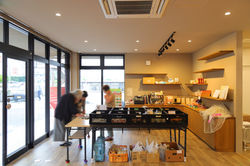 Sangane House さんがね家さんphoto by Ryosuke SATO + ICHIBANSEN/nextstations |  Sangane House さんがね家さんphoto by Ryosuke SATO + ICHIBANSEN/nextstations |
 Sangane House さんがね家さん |
A Station Front Evolving with the Town
Sangane Station, inaugurated in 1967, once flourished as the vibrant core of the Fukamizo district, where cinemas and small shops animated the daily life of the community. With the advent of an automobile-centered lifestyle, however, the liveliness gradually faded, and the station has since become unmanned, enveloped once again in quietness.
Since 2019, through the Sangane Station Future Conference, Kōta Town, local residents, and our office have collaboratively envisioned the future of this area—exploring how a station can once again serve as a place that connects people and generations. While preserving the layers of history and the surrounding natural landscape, the project seeks to create a station front where younger generations take initiative and everyone feels invited to stay.
The first phase, “Sangane-ya-san,” involves the partial renovation of an existing facility into a small rest space that supports both gathering and lingering. The design process incorporated diverse voices from the community, and was guided by three principles:
A space that is always joyful—familiar yet new
A place open to all generations—intuitive, accessible, and welcoming
A bright, transparent environment that mediates between seeing and being seen
Through continuous dialogue and study using models and visual simulations, the space was not conceived as a completed object, but as a framework for ongoing growth together with the community.
“Sangane-ya-san” stands today as a place of beginning—an architectural gesture that inherits the memory of Fukamizo and quietly opens toward the town’s future.